After decades of tragic disappearance, the spaces between home and work are staging a comeback, which is more necessary than for simple nostalgia.
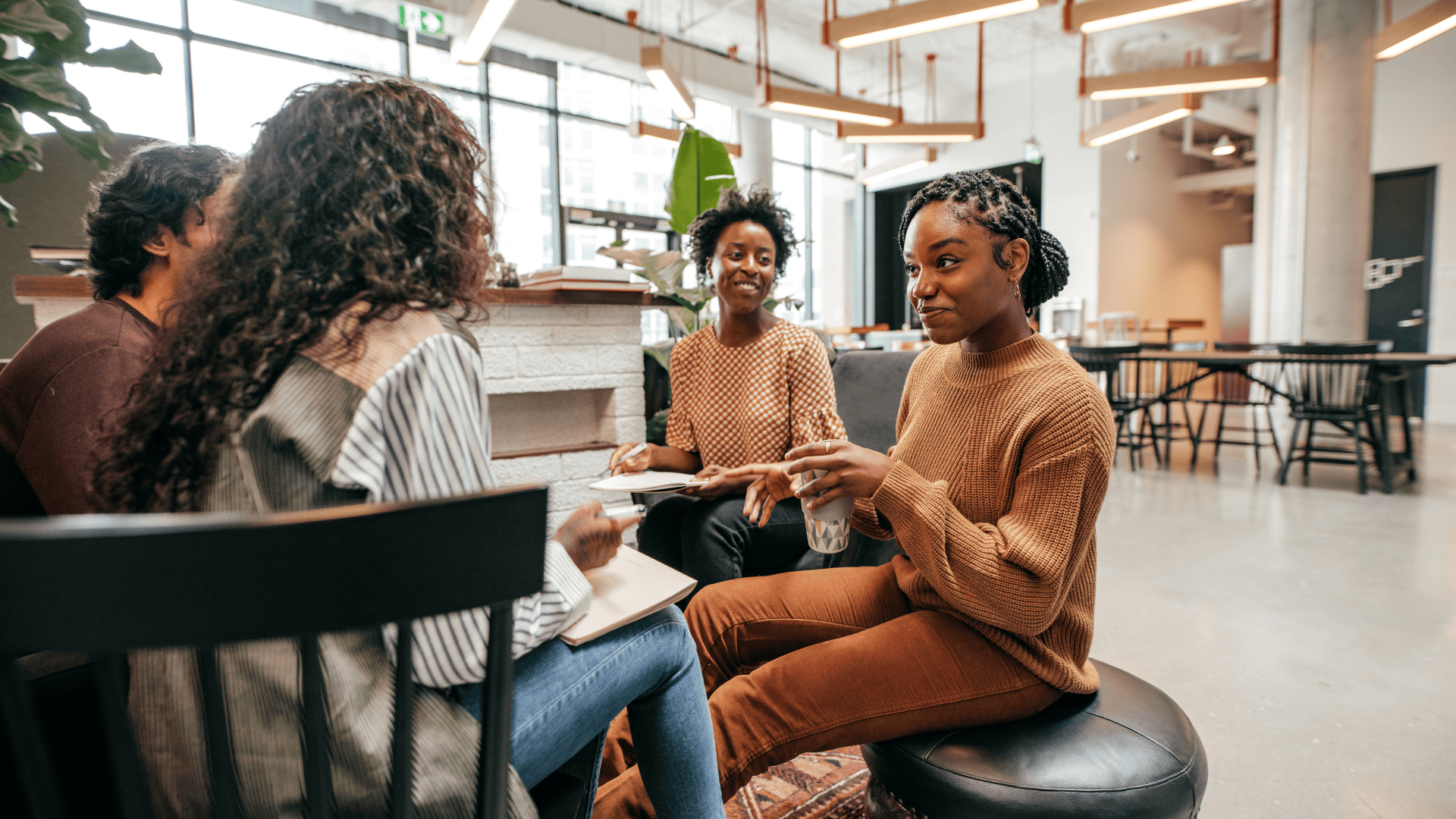
There’s something so intriguing about being in a room full of people who have nowhere else to be. It lacks both the oppressive hum of the workplace, where time is money, and the dim familiarity of home, where intimacy is earned through years of shared history. It’s a kind of social comfort, generated when strangers agree to occupy the same space for no reason other than the space itself.
In 1989, sociologist Ray Oldenburg named these spaces, the “third place,” the great good places between home, work, and school where we gather, unbidden and unhurried, to simply be among others. Coffee shops, libraries, barbershops, parks…you know, the kinds of establishments where conversation is the main activity and the regulars set the tone. In the decades since Oldenburg wrote “The Great Good Place,” we’ve watched these spaces disappear with slow devastation. Only now, are we beginning to understand what we’ve lost.
The term “third places” may feel academic, even precious—one Reddit user in a Denver thread put it bluntly. “You’ve clearly watched too many YouTube urban planners tell you of these mythical spaces.” And yet, the hunger beneath the jargon is unmistakable. Scroll through that same thread and you’ll find people describing, in painstaking detail, the precise texture of connection they’re seeking. The right third space will be neutral ground or a leveling place between differing communities, somewhere conversation can wander without purpose, and a home away from home. “I know of one place that meets these criteria,” one user writes, “but I’m hoping to find others.”
We’re seeing a soft revolution of third spaces. The people want spaces where we can be among strangers and, in the process, become something like neighbors.
Where Did It All Go Wrong?
A 2019 study published in Health Place examined the National Establishment Time-Series database and found that between 2008 and 2015, the United States lost 23 percent of its food and beverage stores, 22 percent of its personal and laundry services (barbershops, beauty salons, laundromats), and 27 percent of its sporting goods, hobby, and bookstores. Religious organizations declined by 17 percent. Even civic and social organizations, like secret fraternal organizations, veterans’ halls, and —saw their numbers dwindle.
These are statistics about relationship and they reveal the changes we’re seeing, collectively, in the ways we relate to one another. As Jessica Finlay, an assistant professor at the University of Colorado Boulder who studies social environments, told 5280 Magazine, these spaces are “immensely important for both individual health and well-being, but also collective social health and well-being.” When a coffee shop closes, it is not just a business that dies. It is the web of regulars who knew each other’s orders, the barista who checked in on the elderly woman when she didn’t show up, the spontaneous conversations between strangers at the counter.
The causes are multiple and mutually reinforcing. Finlay and postdoctoral associate Yue Sun’s research reveals that The Great Recession delivered a body blow to Main Streets already reeling from the rise of big-box retail. Then came the “retail apocalypse” when the Amazon framework hollowed out the American mall system, with decades-old chain stores collapsing under debt. Then the pandemic, which sealed us in our homes and taught us, in a matter of weeks, that nearly anything could be delivered. The social-distancing era, recently noted by BBC, “banned our favorite hangouts” and left us “stuck in environments that we equate only with work—either professional labor or domestic labor, with no place to let off steam or get some respite.”
And underneath all of this is the gurgling, slow restructuring of American cities around the car, around suburbia, around the nuclear family and its private amenities. As Sen. Tina Smith (D-Minn.) observed in an interview with Insider, wealthy communities now offer their residents gated houses with private pools and private parks, while lower-income families find themselves “living in places where there aren’t enough trees, there aren’t enough public spaces … whether it be the local swimming pool or the local park.”
The result is what the Health Place study calls a “third places desert”—the logical extension of the food desert concept, applied to the social infrastructure that makes community possible.
What We Mean When We Talk About Hanging Out
But here’s the complication, and it’s one that anyone who has actually tried to find a third space will recognize. The spaces that remain are often not quite right.
The Reddit thread I mentioned earlier, titled “Genuine third spaces/community centric groups in Denver and surrounding area,” is a masterclass in this frustration. User after user suggests places—parks, cafes, bars, libraries—only to have them gently rejected. Parks, one person notes, are fine for picnics with friends you already have, but “when was the last time you met someone at a park?” Cafes have become de facto offices, everyone hunched over laptops, conversation reduced to the tapping of keys. Bars require drinking, which requires money, which introduces precisely the kind of transactional dynamic that true third places are meant to transcend.
“The descriptions you used for third spaces treats it like they just exist naturally,” one commenter writes, with a certain weariness. “These are descriptions of spaces like a park where individuals have done the work to build a community there.”
This is the insight that the idealized version of third spaces often misses. They aren’t magic. They aren’t fountains of community that spring fully formed from the ground. They’re spaces that enable the work of relationship, but the work itself must be done by the people who inhabit them. And that work has become, over the past decade, increasingly difficult to even imagine.
The Health Place study, drawing on Oldenburg’s framework, enumerates the characteristics of a true third place as neutral ground, a leveling place where socioeconomic status doesn’t matter, conversation as the main activity, accessibility and accommodation, regulars who set the tone, a low profile, a playful mood, a feeling of being home away from home. Read that list now, in 2026, and notice how many of its elements run directly in opposition to the logic of contemporary life. Neutral ground? Every space is coded by price, by clientele, by the unspoken rules of who belongs. Conversation as the main activity? We have spent fifteen years training ourselves to look at our phones the moment silence threatens. Regulars? We move cities every few years, change jobs, change relationships, change selves.
There’s one user in the Reddit thread who insists, “I know of one place that absolutely meets all these criteria” but never names it, perhaps because to name it would be to violate its magic, or perhaps because the magic is precise enough for the users personal wants, which may be enough for them and not enough to actually meet the criteria.
The Renaissance, Such as It Is
And yet, even as the data shows decline, there are small glimmers of hope shining through the trees. In Denver, according to 5280‘s recent roundup, there are at least 36 places where people are gathering in ways that approximate the third place ideal—and the list is deliberately incomplete, a sampling rather than a census, meant to push the topic further into discussion.
Consider the range: Sudden Fiction Books in Castle Rock hosts a book club on the third Monday of each month, free and open to anyone. Kickin’ It Kids Gym offers a Mommy & Me class where new parents can socialize while their infants play. TrashHawk Tavern hosts “Trash Stitch” twice a month as an evening of embroidery and cross-stitch with new friends. Petals & Pages, a bookstore on Santa Fe Drive, runs a monthly Trans+ Community Game Night. Chaos Bloom Theater has a weekly, 9 p.m. All Improv Comedy Jam that is, miraculously, free.
What these spaces share is the focused intention on community building. They aren’t accidental third places, like the corner bar you wander into or the diner where everybody knew your name, that we’ve come to idealize. They’re constructed third places, built by people who recognized that the spontaneous version was no longer possible and decided to create the conditions for connection by hand.
This is a shift that the renaissance discourse often misses. We’re not returning to some golden age of American sociality. We’re building something new from scraps, in the ruins of what came before. The women-run Town Hall Collaborative in Denver’s Baker neighborhood offers space for graphic designers, female activist groups, and crafters “with a penchant for social justice.” January Coffee in Boulder promotes “No WiFi Weekends” specifically to support “conversations and togetherness”—a deliberate intervention against the digital saturation that made third places scarce in the first place. Crepe Therapy Café in Boulder hired a “connector,” Steve Laser, whose job is to welcome and engage guests with genuine questions and conversation. “We’re trying to be a spot for cross-generational belonging,” Laser told 5280.
There’s something almost absurd in this moment, that we’ve reached a point where we must pay someone to facilitate the kind of casual sociality that was once the natural byproduct of simply existing in public. And still, there’s also something hopeful. The desire persists. The hunger remains. We’re still, after everything, willing to do the work.
What We’re Protecting Ourselves From
The Health Place study offers a framework for understanding why this work matters. Third places, the authors argue, support wellbeing through four mechanisms: stimulation, support, protection, and care.
Stimulation is the simplest. It’s the cognitive engagement of encountering difference, of having your assumptions gently challenged by someone who does not share them. Support is the emotional infrastructure of community, the knowledge that there are people who will notice if you disappear. Protection is the life-saving function that third spaces served during the polar vortex of 2019, when libraries and churches opened as warming centers and stores donated food to shelters. And care is the daily, unremarkable kindness of a barista who checks in about the medical appointments of her favorite elderly customer. These seemingly unremarkable moments are the basic scaffolding of a life worth living and we’ve been systematically dismantling them for decades.
The loneliness epidemic is by now well-documented. The surgeon general has issued warnings, the therapists’ client lists are full, and the articles multiply. But what the third spaces conversation adds is a spatial dimension to the problem. We aren’t just lonely because we spend too much time on our phones. We’re lonely because we eliminated the physical spaces where loneliness might be cured by the simple presence of others, where we might be drawn, despite ourselves, into vulnerable conversation.
In Denverite’s 2023 exploration of third places, one commenter recalls their college dining hall as their third place, reminiscing the clink of silverware, the gradual accumulation of friends, the sense of belonging that came from simply showing up, again and again, in a space designed for lingering. “This was our ‘third place,'” they write. And then, wistfully: “When you’re not spending time at home or at work, where are you? When it’s Labor Day weekend and you don’t have vacation plans, where in Denver do you go?”
The Revolution Will Be Conversational
I keep returning to one of the Reddit comments, the one that pushes back hardest against the idealization of third places. “You’re talking like a theoretical urban geography student here,” the user writes. “Just go to a local park or bar and you’ll have what a third space is in reality.”
There is wisdom in this impatience and also a kind of surrender. The gap between what we want from third places and what we can actually find has grown so wide that some people have stopped believing the want is legitimate. They’ve convinced themselves that the problem is not the disappearance of spaces but the unreasonableness of the desire, insisting that we should be satisfied with what remains. That wanting more is an over-sophistication meant to “intellectualize” the topic into oblivion.
But the people who keep searching, who post in Reddit threads asking for recommendations, who show up at Community Game Night or the neighborhood knitting circle know better. It’s perhaps the most practical thing about humanity. It’s the desire to be known, slightly, by people who have no obligation to know you. It’s a desire to exist in public without purpose, without productivity, without the constant pressure to optimize. It’s the desire to be, for an hour or two, simply among.
The soft revolution of third spaces isn’t going to come once the topic reaches mainstream headlines and it won’t come as a trend on social media. Indeed, its very existence depends on putting the phone down and looking up. But it is happening, in fits and starts, in Denver and everywhere else people are still willing to do the slow, difficult work of creating connection.
Jessica Finlay, the CU Boulder researcher, calls this building a “broader relational portfolio” or the diversity of encounters that keeps us healthy, that protects us from the narrowing of life into work and home, work and home, work and home. “If we lose these sites and the ability to have different kinds of connections on an everyday basis,” she told 5280, “we could see real impacts on physical, mental, and social health and well-being.”
The revolution will not be televised. It’ll happen in bookstores and gardens, in community centers and coffee shops, in all the places where people still gather for no reason except to relate to one another. It’ll be quiet, it’ll be slow, and it’s going to require each of us to work at creating the world we want to see.
Discover more from Color Coded Magazine
Subscribe to get the latest posts sent to your email.