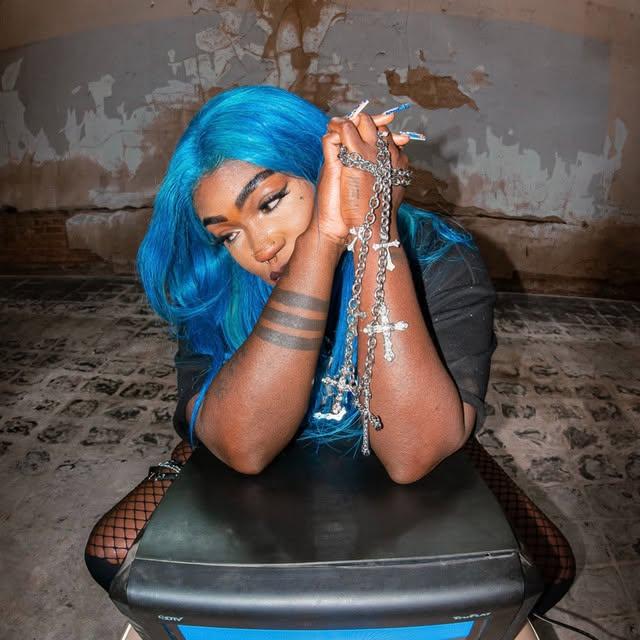
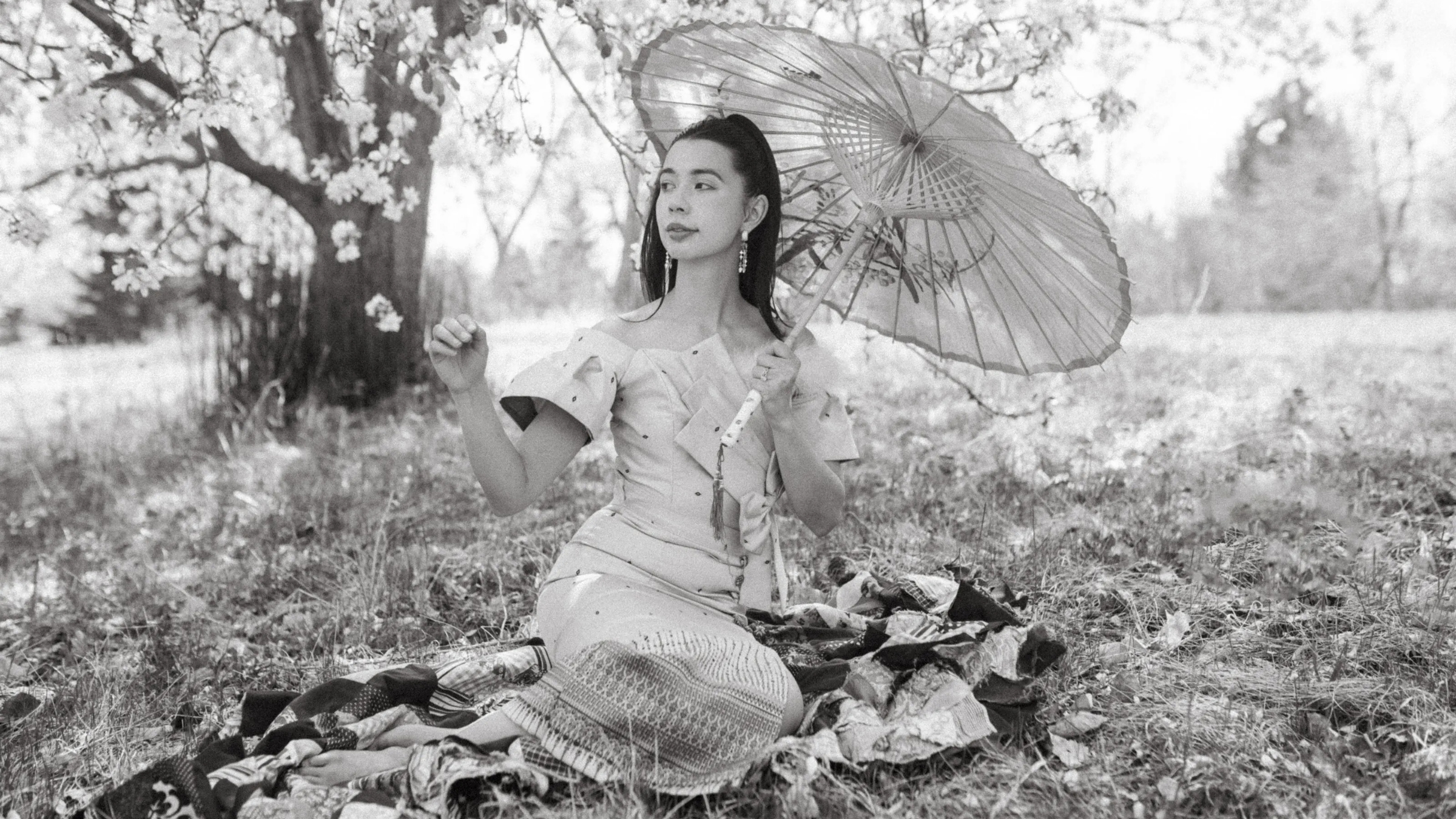
This Friday, the free‑jazz collective Irreversible Entanglements releases Future Present Past, their sixth album and second for the legendary Impulse! Records. Across ten tracks, with contributions from Helado Negro and the vocalist Camae Ayewa (Moor Mother) from MOTHERBOARD, the quintet continues a decade‑long practice of turning improvisation into political testimony that, as the band puts it in the album’s liner notes, stands “on the shoulders of legions.”
On a spring evening in 2015, at a now‑shuttered Brooklyn performance space called the Silent Barn, a group of musicians gathered for an event called Musicians Against Police Brutality. It was a response to the killing of Akai Gurley, an unarmed Black man shot by a New York City police officer two months earlier. The bill was crowded, in the best way, and featured, among others, a trio of bassist Luke Stewart, saxophonist Keir Neuringer, and poet‑vocalist Camae Ayewa, and a duo of trumpeter Aquiles Navarro and drummer Tcheser Holmes.
By the end of the night, the two acts had found each other. Navarro later recalled hearing Neuringer’s alto saxophone from somewhere in the room. “The body doesn’t lie,” he told DownBeat in 2023. “So Keir’s saxophone sound caught my attention.” After the set, Neuringer approached the duo with an idea. As Stewart put it, “Everything came together like the universe intended.”
That chance meeting became Irreversible Entanglements. Ten years later, the free‑jazz quintet (now signed to the legendary Impulse! Records, with six albums to their name) releases Future Present Past this Friday. On its face, a decade is a respectable run for any band. For a collective that formed at a protest, whose members are predominantly Black musicians, and whose subject matter expresses a demand for liberation, the jazz project’s longevity is the fruit of the music’s inherently political messaging. That span of time tells a winding story through the long history of jazz as protest, the genre’s marginalization as a commercial force, and how the DNA of jazz has become the bedrock of nearly everything we listen to today.
Jazz Predicted the Civil Rights Movement
To understand what Irreversible Entanglements is carrying forward, you obviously have to go back further than 2015. Jazz critic Stanley Crouch once wrote that “jazz predicted the civil rights movement more than any other art form.” In The New York Daily News, Crouch wrote, “Once the whites who played it and the listeners who loved it began to balk at the limitations imposed by segregation, jazz became a futuristic social force in which one was finally judged purely on the basis of one’s individual ability.”

As early as 1929, Louis Armstrong altered the lyrics of Fats Waller’s “(What Did I Do to Be So) Black and Blue” to emphasize racial prejudice. Ten years later, Billie Holiday recorded “Strange Fruit,” Abel Meeropol’s harrowing response to a lynching. By the 1950s and ’60s, the music had become a direct weapon. Charles Mingus titled a song after Arkansas governor Orval Faubus, who had used the National Guard to block school integration. Max Roach’s 1960 album We Insist! traced a history of Black America from slavery to the fight for freedom in South Africa. John Coltrane wrote “Alabama” after the 1963 Birmingham church bombing that killed four young girls.
Jazz was a form of witness, a communal documentation of violence and survival. And for a time, it was also popular music. In an article for Smithsonian Folkways Magazine, Dr. John Edward Hasse and Bob Blumenthal noted that the music had “moments of dominance” in the Swing Era and beyond, producing stars whose names were known in households across the country.
But its dominance, in American culture, was impermanent, especially because it was born in Black communities in a time when it was widely acceptable for white supremacy to assert itself overtly and violently. The Smithsonian also reports “periods of marginalization, wherein even its most accomplished figures earned respect primarily from peers and enthusiasts.” Jazz was once assailed as “noisy, discordant, and an assault on moral values”, which sounds familiar because it’s the same language that would later be leveled at hip‑hop. By the 1980s, the genre had largely receded from the mainstream, finding a new home in concert halls, university programs, and a dedicated but comparatively small audience. The music had been, in the words of some critics, colonized, its innovators honored in retrospect, and its living practitioners struggling for visibility.
The Beat That Could Never Die
When hip‑hop emerged in the Bronx in the 1970s, it was born from the same conditions that shaped jazz. Black and Brown communities in New York faced the same economic neglect, seasoned with police violence, and the creative urgency of young people with few resources birthed yet another new art form out of the shared pain. On their blog, The New York Jazz Workshop notes that because music programs had been pulled from public schools, “the instruments thus became turntables and microphones.” What jazz did with horns and drums, hip‑hop did with turntables, breakbeats, and the human voice.
The connection between the two traditions was never broken. Hip‑hop’s early producers built tracks from jazz records, pulling the moments that swung hardest. In the 1980s, Herbie Hancock’s “Rockit” introduced scratching to a global audience. In the 1990s, groups like A Tribe Called Quest and Digable Planets built entire aesthetics around jazz samples, while Guru’s Jazzmatazz series brought in legends like Donald Byrd and Branford Marsalis. Roy Hargrove’s Hardgroove (2005) featured Common and Erykah Badu. Robert Glasper’s Black Radio series made the fusion explicit, with guests from Snoop Dogg to Bilal.
In 2015, a study by researchers at Queen Mary University, Imperial College London, and Last.fm analyzed 17,000 songs on the U.S. pop charts from 1960 to 2010. Their conclusion, reported in the Los Angeles Times, was that hip‑hop (not the Beatles, as it had been widely believed) triggered the single greatest evolution in American pop music of the last half‑century. The study’s lead author, Armand Leroi, put it bluntly. “Hip‑hop is the single greatest revolution in the U.S. pop charts by far.”
The study showed that the sound jazz helped create through its rhythms, its improvisatory spirit, and its focus on the break, became the dominant musical language of the 21st century. You can hear it in Kendrick Lamar, in Beyoncé, and in the production techniques that now define pop. Yet, the tradition that made it possible remains, for many listeners, a niche interest or a heritage genre that’s something to be studied rather than lived, completely incongruent with the structure of how hip-hop culture has evolved to be an entire lifestyle.

Five Standing on Shoulders
This is the contradiction that Irreversible Entanglements has inhabited for a decade. They’re a free‑jazz collective, working in a form that was pushed to the margins. They’re also signed to Impulse! which happens to be the same label that released John Coltrane’s A Love Supreme, Max Roach’s We Insist!, and Archie Shepp’s Fire Music. Likewise, they record at Van Gelder Studio, where those records were made and they’re a band whose members grew up during hip‑hop’s golden age, absorbing its rhythmic vocabulary as naturally as they absorbed the jazz tradition.
The DownBeat profile from 2023 captures something essential about how they’ve sustained themselves. Drummer Tcheser Holmes described a pre‑recording meeting in California as a “powwow” where they talked face‑to‑face about their direction. “It feels differently when you talk about something face‑to‑face,” he said. Bassist Luke Stewart spoke of the “camaraderie and trust” that the band has taught him. “In this band, we push each other so much, musically. And that inspires me to push myself forward in other projects.” Saxophonist Keir Neuringer, reflecting on their chemistry, said simply: “The playing together is a love chemistry. It’s a real expression of how we love each other’s artistry, creativity and individually as people.”
That love is Irreversible Entanglements’ intramural structure. The band has never been centralized in one city; members have lived in Philadelphia, Washington, D.C., New York, Rochester, and now Los Angeles, where Ayewa teaches at USC. They sustain their collective across distance through intentionality and a shared commitment to the cause that predates their perceived popularity.
Future Present Past
This Friday, that commitment yields its sixth album. Future Present Past arrives with guest contributions from Helado Negro and Camae Ayewa (Moor Mother) from MOTHERBOARD. The title alone is a statement, rejecting the limiting tradition of treating jazz as a completed arca of Black protest. The band’s own words in the album’s artist statement frame the album as an act of lineage. “We form as five and transform into billions. Billions of us on this planet sharing this journey through existence — futures full of possibility and potential, the present with all its anxieties and uncertainties, pasts as wellsprings of ancestral wisdom and histories’ warnings. This album is five standing on the shoulders of legions.”
Those legions include the free‑jazz pioneers who refused to separate sound from politics. They include the hip‑hop producers who built new forms from old records and they include an audience that is still capable of sitting with music that demands attention.
Jazz was marginalized, but its DNA became the foundation of pop. Hip‑hop rose from those same conditions and remade the world and through it all, artists like these five have kept making the kind of music that forces us to remember where it all came from.
Irreversible Entanglements has now existed for a decade. The question their longevity raises isn’t How have they lasted? but What does it require of us listeners, writers, and institutions to meet them where they are? If the arc of this music bends toward anything, it’s definitely not any kind of quiet preservation. Irreversible Entanlgements wants us to know that it’s a continued, noisy, entangled lifestyle.
Irreversible Entanglements’ Future Present Past is out March 27 on Impulse! Records. You can pre-save the album here. They play Knockdown Center in Brooklyn on March 26 with Shabaka and Tom Skinner, followed by two nights at Solar Myth in Philly on March 27 and 28.

Sources
Carnegie Hall. (n.d.). Rap/hip-hop. In Timeline of African American music. Retrieved March 23, 2026, from https://timeline.carnegiehall.org/genres/rap-hip-hop
Hasse, J. E., & Blumenthal, B. (2011, Winter). Jazz. Smithsonian Folkways Magazine. Retrieved March 23, 2026, from https://folkways.si.edu/magazine-winter-2011-jazz-cover-story/ragtime/music/article/smithsonian
Hum, P. (2009, January 19). Jazz for Obama VI: Swinging their way to freedom. Ottawa Citizen. Retrieved March 23, 2026, from https://ottawacitizen.com/entertainment/jazzblog/jazz-for-obama-vi-swinging-their-way-to-freedom
Irreversible Entanglements. (2025, May 6). In Wikipedia. Retrieved March 23, 2026, from https://en.wikipedia.org/wiki/Irreversible_Entanglements
Motormouth Media. (2026, March 23). Out Friday: Irreversible Entanglements Future Present Past out March 27 via Impulse! [Press release].
Murph, J. (2023, November 28). The chemistry of Irreversible Entanglements. DownBeat. Retrieved March 23, 2026, from https://downbeat.com/news/detail/the-chemistry-of-irreversible-entanglements
Penn Live Arts. (2020, August 19). Reflection: Jazz as protest music. Retrieved March 23, 2026, from https://pennlivearts.org/blog/reflection-jazz-as-protest-music
Pioneer Works. (n.d.). Irreversible Entanglements Working Artist Fellowship. Retrieved March 23, 2026, from https://pioneerworks.org/residency/irreversible-entanglements
Schleuss, J. (2015, May 9). Hip-hop, not Beatles, had greatest influence on pop music, study says. Los Angeles Times. Retrieved March 23, 2026, from https://graphics.latimes.com/music-evolution-hip-hop-rap/
Shearn, C. (2018, November 30). What are the connections between jazz and hip hop? New York Jazz Workshop. Retrieved March 23, 2026, from https://newyorkjazzworkshop.com/what-are-the-connections-between-jazz-and-hip-hop/
Discover more from Color Coded Magazine
Subscribe to get the latest posts sent to your email.